

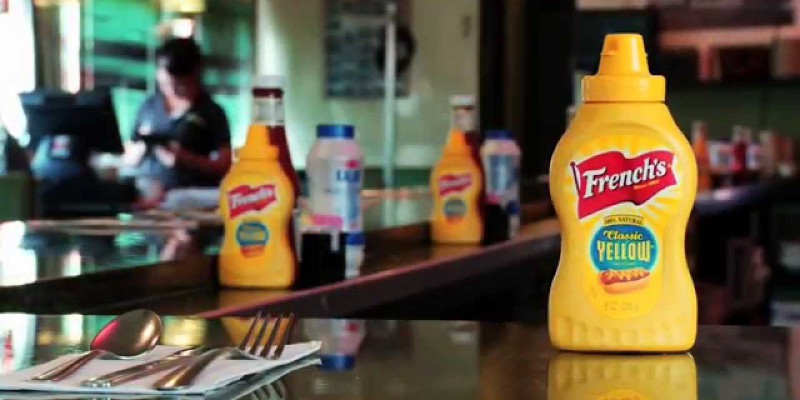
French’s Classic Yellow Mustard was introduced to the public in 1904 at the St. Louis World’s Fair by brothers George and Francis French. The condiment was deliberately paired with another newly popularized food item at the fair: the hot dog. This brilliant marketing pairing created an instant culinary hit that became a staple of American food culture. Contrary to popular belief, the brand name “French’s” comes from the founders’ surname, not the country of France.
Origins and Formulation
- The Founders: Robert Timothy French originally established the R.T. French Company in Rochester, New York, to sell spices and extracts. After his passing in 1893, his sons, George and Francis, took over the business.
- A New Recipe: In the early 1900s, George and Francis wanted to develop a milder, smoother, and creamier mustard than the sharp, piquant European varieties available at the time.
- The Turmeric Secret: They launched their creation as French’s Cream Salad Mustard. It achieved its trademark bright, vibrant color from the heavy inclusion of turmeric, a natural spice ground into the recipe.
Evolution of Packaging and Identity
- 1915: French’s mustard transitioned into glass bottles featuring a secure, screw-top lid.
- 1974: The company introduced the single-serve squeezable packet, making the condiment a portable staple for ballpark games and tailgates.
- 1991: The brand famously phased out glass jars in favor of plastic, user-friendly squeeze bottles.
- 2001: The classic bottle got an upgrade with an innovative, inverted, “no-mess” stay-clean cap.
Corporate Ownership and Modern Status
- Global Sales: In 1926, the French brothers sold the business to the British firm J. & J. Colman. It later shifted through parent company Reckitt Benckiser.
- Acquisition by McCormick: In 2017, McC McCormick & Company bought the iconic brand.
- The Modern Product: Today, the recipe for French’s Classic Yellow Mustard remains virtually identical to the 1904 original. It is manufactured using stone-ground, Grade #1 mustard seeds at a massive production facility located in Springfield, Missouri.
If you are interested, I can provide more details on how the manufacturing process works or explore the history of other French’s products like their crispy fried onions.

Traveler and Chef