

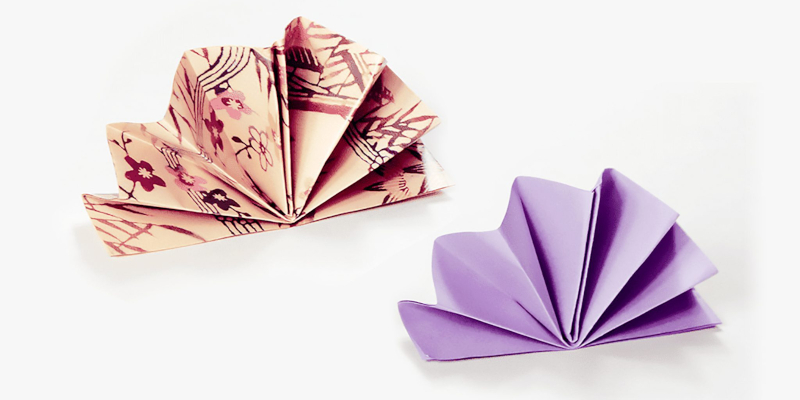
The “arts” style of napkin folding, historically known as Plicatura, transforms linens into three-dimensional sculptures ranging from animals to architectural forms. This art form peaked during the Renaissance and Baroque eras, where elaborate “triumphs” (large centerpieces) decorated banquet tables.
Most artistic folds belong to specific “folding families” that use complex pleating and interlocking techniques:
The Flower Family (Lotus/Water Lily):
A 3D bloom that can hold a roll or gift in its center.
Instructions: Fold all four corners to the center. Flip and fold corners to the center again. Repeat a third time. While holding the center, reach underneath and pull out the “petals” to create the blossom.
The Bird Family (Bird of Paradise/French Lily):
Elegant, high-reaching folds that mimic natural forms.
Fold diagonally into a triangle. Fold the bottom corners up to the peak. Fold the bottom edge up about 2 inches, then fold the peak of that small triangle back down. Flip, interlock the left and right sides, and peel back the outer layers to form “petals”.
The Architectural Family (Obelisk/Watchtower):
Stately, upright structures inspired by Baroque architecture.
Instructions (Pyramid): Fold diagonally into a triangle. Bring the right and left corners up to meet the top point (creating a diamond). Flip over and fold the top point down to the bottom. Fold along the center seam to stand the “structure” upright.
Historical & Artistic Context
Renaissance Origins: Emerged in 16th-century Florence, Italy, paralleling the fashion for voluminous, pleated clothing.
Professional Schools: During its “Golden Age,” dedicated schools in Nuremberg, Germany, taught butlers the precise art of creating linen sculptures like mythical creatures and ships.
Modern Resurgence: Today, these techniques are preserved in fine dining and specialized tutorials like Napkin Origami which treat fabric as a medium for sculptural expression.
Tips for “Art” Style Folds
Fabric Choice: Use high-quality, starched cotton or linen. Synthetic fabrics like polyester are often too slippery to hold complex artistic shapes.
Precision: Every fold must be sharp. Traditional artists often ironed each crease to ensure the sculpture’s structural integrity.
Adornments: Modern artistic styles often integrate ribbons, flowers, or napkin rings to add “flare” and secure more intricate designs.

Traveler and Chef